History Between the Pages of An Imperfect Woman
Excerpt from “Goodbye St. Louis”
“Mary desired privacy when she shared her news with John. She yearned to pour out her profound fear of delivering their baby in a new city. Would he understand how supervising moving and unpacking might tax her delicate condition?
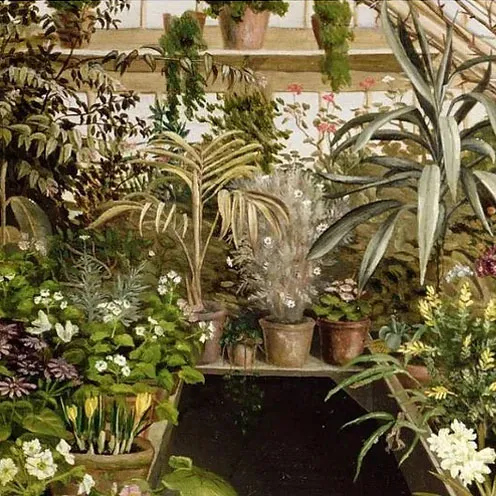
Their bedroom offered no sanctuary, suffering from too many ears. But the cozy sunroom, crowded with thriving ferns and potted plants, was ideal for a private talk. Amid this small forest of hot house flora, a wicker settee looked out through leaded glass windows onto the rose garden. Each rose bush was as pregnant as Mary, with multitudes of summer buds.
Before John arrived, she rearranged a few pots for better privacy and repeatedly brushed off the wicker with a quaking hand. She lined up the settee’s pillows in a precise row of three along the back. Her palms were damp, and under her shirtwaist, she felt her heart beating faster than a skittish horse. Their special meeting seemed slightly clandestine. How would John react to her news?
“There you are! Shall we frolic amid this jungle? Like Tarzan the Ape Man and Jane?” John arrived in the sunroom with his usual flair.”
History Behind the Pages
While it’s true there is nothing new under the sun . . . trust the Victorians to take the sunroom to elaborate heights. Victorians loved their plants. Grand structures made of iron and glass, sunrooms were havens for relaxation, displays of exotic plants and architectural testaments to the owner’s wealth. Its predecessor, the larger conservatory, heralded a demand for plants in proximity to one’s home. Near the family sitting room? Even better.
Attached to the home, scenic sunrooms were not mere greenhouses. Stacked platforms of a plethora of plants, large and small, were displayed in generous sunlight amid Victorian affinity for more is better. Sunroom furniture rivaled home décor. Not just an ode to plants, sunrooms were suitable year-round living spaces. Practical greenhouses, designed as winter shelters for plants, were usually placed away from the home.
With the Industrial Revolution, a wealthy middle class arose with increasing prosperity. Houses were built on the outskirts of towns and cities where there were more space and cleaner air in the fast-growing new ‘suburbs’. The family sunroom was in high demand by buyers seeking their own corner of Eden. Ferns, collections of orchids, climbing plants, hanging baskets of rare ivies, exotic pitcher plants and citrus fruit trees filled the sunrooms including fountains, pools, and birds in ornate cages. “Crammed” is often a descriptor for Victorian home décor . . . the sunrooms followed suit with a joyful jungle of excess.
England in the 1800’s introduced fruit trees and floral plants from around their world-wide Empire. The sunroom appeal went public with the construction of magnificent glass houses such as the Crystal Palace for the Great Exhibition of 1851 in London and the Palm House at Kew. For middle and upper-class Victorians, a home sunroom became the 1800’s equivalent to our exercise, media, or game rooms of today. With fascinating plants arriving from distant corners of the Empire, Victorians collected new curiosities from all over the globe. Today, we might collect state-of-the-art exercise equipment, AI media and virtual reality googles.
Even hospitals noted the health bonuses of natural plants and sunlight. Solariums (glass rooms) were built to help people recover from illnesses like pneumonia, pleurisy, and tuberculosis. The publishing world enjoyed a surge in gardening topics and professional how-to journals. Gardeners had a field day whether indoors or out.
Surviving Victorian or Edwardian glasshouses are now prized for their original features such as metal opening brackets, decorative floor tiles, or fancy heating grills. These “sensuous havens” sidestepped the ever-present Victorian code of respectability. Artists of the time often painted sunrooms as the setting for unchaperoned couples and other affairs of the heart. James Shirley Hibberd writing in 1873 noted the potential “for frequent resort and agreeable assemblage at all seasons and especially at times of festivity.”
Oh yes, if only those glass walls could talk.